

Hyperbaric Chambers Australia / Insights
Best Hyperbaric Chamber for Home Use 2026: AU Guide
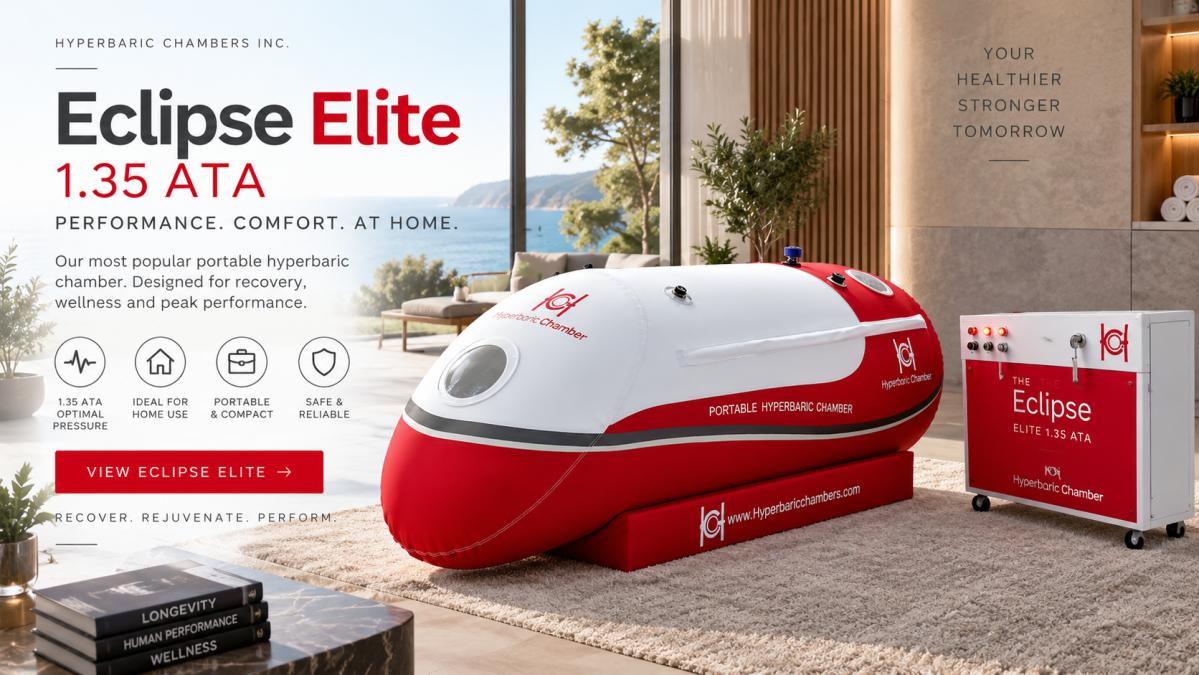
Table of Contents
- How to Compare Home Hyperbaric Chambers in 2026
- Soft-Shell vs Hard-Shell Hyperbaric Chamber: Which Suits Your Home?
- Hyperbaric Chamber Dimensions and Space Requirements at Home
- Home Hyperbaric Chamber Safety and Supervision
- Ease of Access: Lying, Seated and Wheelchair-Accessible Options
- Installation, Maintenance and Ongoing Support
- What to Confirm Before You Buy a Home Hyperbaric Chamber
- Frequently Asked Questions
Last Updated: 4 October 2026
How to Compare Home Hyperbaric Chambers in 2026
Choosing the best hyperbaric chamber for home use in 2026 comes down to four things: pressure rating, control and monitoring features, physical size, and how easy the unit is to access and maintain. At Hyperbaric Chambers Inc, we supply eight chamber models across portable and hard-shell designs. (Source: Australian regulatory requirements for medical devices)
A hyperbaric chamber is a sealed pressurised enclosure that raises the ambient pressure around the body while oxygen is delivered separately through a breathing system. Most home units use ambient air for pressurisation, with oxygen supplied through a mask or head tent.
The comparison below is the quick version. The rest of this guide explains what each row means in practice.
|
Feature |
What to Check |
Why It Matters |
|---|---|---|
|
Pressure rating |
ATA listed for the exact model |
Sets the operating environment |
|
Controls |
Manual vs CPU-controlled |
Consistency between sessions |
|
CO2 handling |
Ventilation, monitoring, scrubber |
Air quality over long sessions |
|
Oxygen delivery |
Mask or head tent |
Separate from chamber pressurisation |
|
Footprint |
Length, width, ceiling height |
Whether it fits the room |
|
Access |
Lying, seated, wheelchair |
Who can use it independently |
|
Warranty |
Terms per model |
Long-term support cost |
Pressure Ratings and What They Mean for Home Use
Pressure in hyperbaric chambers is measured in atmospheres absolute (ATA). A 1.0 ATA chamber matches normal sea-level air pressure, so any chamber above that is adding pressure on top of what you already experience.
Our range spans 1.3 ATA to 2.0 ATA depending on the model. Higher pressure is not automatically "better" for every buyer: it changes the operating environment, the engineering required, and often the size and cost of the unit. What matters is matching the rating to your intended use and confirming it with a qualified health professional before you buy.
Controls, Monitoring and Oxygen Delivery Explained
Control systems separate entry-level chambers from premium ones. The iRestore 1.3 ATA uses HEPA filtration and a two-year warranty, without CPU controls or a carbon scrubber. Selected higher models add CPU controls, carbon dioxide monitoring, scrubbers, and dedicated oxygen delivery through a mask.
That distinction matters because carbon dioxide builds up in any sealed space. Ventilation, monitoring and scrubbing are the mechanisms that manage it, and not every model includes all three.
Oxygen delivery is a separate system from pressurisation. The chamber raises ambient pressure; oxygen reaches you through the breathing circuit. Buyers often conflate the two, then wonder why a chamber without a mask setup feels different from one with it.
Soft-Shell vs Hard-Shell Hyperbaric Chamber: Which Suits Your Home?
Soft-shell chambers use flexible, fabric-based construction. Hard-shell chambers use rigid construction and typically suit dedicated setups where the unit stays in one place.
The trade-off is straightforward. Soft-shell offers portability and price positioning within a range. Hard-shell offers durability, fixed internal space, and the ability to build in seated or walk-in access.
For a spare room that doubles as a guest space, soft-shell can be a suitable option. For a clinic, sports recovery facility or a permanent home wellness room, hard-shell can be a long-term investment.
Hyperbaric Chamber Dimensions and Space Requirements at Home
Measure the room before you shortlist a model. You need the chamber's external footprint plus clear walking space on every side for entry, exit and any attendant access. Ceiling height matters for seated and walk-in designs.
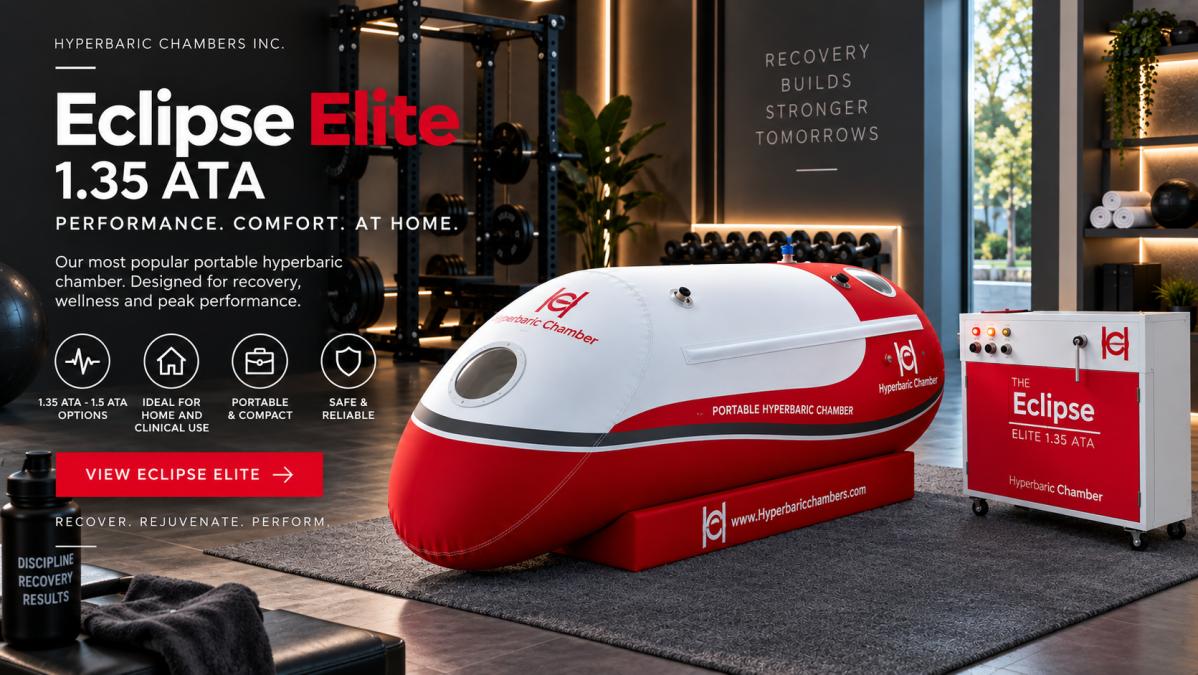
Our range includes lying, seated and walk-in configurations, and each has a different footprint. A lying chamber needs length; a seated chamber trades length for height; a walk-in unit needs the most floor area of all. Confirm the exact dimensions for the model you are considering rather than assuming a category size.
Home Hyperbaric Chamber Safety and Supervision
Safety requirements follow the verified documentation for your exact model, not a generic rule of thumb. Operating instructions, permitted items inside the chamber, supervision requirements and emergency procedures all vary between units.
A chamber that can be operated from inside is not the same thing as a session that is appropriate without an attendant. Internal controls give the occupant the ability to adjust the unit; they do not by themselves determine whether supervision is needed. Ask us to walk you through the requirements for the specific model.
Ease of Access: Lying, Seated and Wheelchair-Accessible Options
Access design decides who can use the chamber independently. Lying chambers suit users who can transfer onto a flat surface. Seated chambers, including the Eclipse Seated 1.5 ATA and Eclipse Elite 2.0 ATA Seated, suit users who prefer an upright position or find lying uncomfortable.
The Eclipse Wheelchair 1.4 ATA is built for buyers for whom mobility is the deciding factor. If independent entry and exit matter to you, this is the specification to discuss with our team before anything else, because access cannot be retrofitted to a chamber that was not designed for it.
Claustrophobia is a real consideration too. A seated or portable design often feels less enclosed than a full lying chamber, which can make the difference between completing sessions and avoiding them.
Installation, Maintenance and Ongoing Support
Installation requirements depend on the model. Portable chambers generally need less setup than hard-shell units, but every chamber needs a suitable surface, adequate ventilation and clear access. Follow the manufacturer documentation for your specific unit rather than improvising.
Maintenance focuses on filtration, seals, ventilation components and, on models that include them, scrubber media. The iRestore uses HEPA filtration; selected higher models add carbon dioxide monitoring and scrubbers, which introduce their own servicing schedule.
Warranty terms differ across the range. The iRestore carries a two-year warranty, while selected chambers include lifetime warranties. Confirm the terms for your exact model, because warranty coverage is not uniform across the eight-model range.
What to Confirm Before You Buy a Home Hyperbaric Chamber
Work through this checklist before committing to any unit:
- Confirm the exact ATA rating for the model you are considering
- Check whether it includes CPU controls, CO2 monitoring and a scrubber
- Confirm how oxygen is delivered: mask or head tent
- Measure the room, doorways and hallway turns
- Decide between lying, seated and wheelchair-accessible entry
- Read the supervision and permitted-items documentation
- Confirm the warranty terms for that specific model
- Discuss your intended use with a qualified health professional
Published research on hyperbaric oxygen therapy covers specific conditions, populations, pressures and oxygen delivery methods. It does not establish that any particular home chamber will produce a given result for you. Treat research as context for a conversation with your clinician, not as a promise.
Where a detail is not published for a model, ask us directly rather than assuming. A short consultation is faster than discovering a mismatch after delivery.
The best hyperbaric chamber for home use in 2026 is the one whose pressure rating, controls, footprint and access design match your room and your needs, with warranty and support terms you have actually read. Compare chamber types and our verified models on that basis, not on headline claims. Confirm the specifications for your exact unit with our team before you order, and involve your health professional in the decision.
External references
- Therapeutic Goods Administration — Medical devices: Information about medical-device regulation in Australia.
- Alfred Health — Hyperbaric service information: Clinical hyperbaric treatment and oxygen delivery.
- US FDA — Safe use of hyperbaric oxygen therapy devices: Manufacturer instructions, supervision and equipment maintenance.
Frequently Asked Questions
What should I look for when buying a hyperbaric chamber for home use?
Start with the pressure rating in ATA, because it determines what the chamber can realistically be used for. Then check the control system, whether carbon dioxide monitoring or a scrubber is fitted, and how oxygen is delivered, usually by mask. Confirm dimensions against your room, the warranty terms for that exact model, and what local installation and servicing support is included. Ask for the written specifications rather than relying on marketing claims.
What is the difference between soft-shell and hard-shell hyperbaric chambers?
Soft-shell chambers are fabric units that pack down and can be a more budget-friendly option, while hard-shell chambers hold their shape. In our range, soft-shell options include the iRestore 1.3 ATA and Eclipse Elite 1.35 ATA, while hard-shell models such as the Synergy 2.0 ATA and GenZen 2.0 ATA Walk-In are larger and need more permanent space. The right choice depends on your pressure needs, room size and budget.
How much space does a home hyperbaric chamber need?
Space depends on the model. Lying chambers need enough length for the full unit plus room to walk around it, seated and wheelchair-accessible models need clearance for entry and exit, and walk-in chambers need the largest footprint. Measure your room and compare it against the published dimensions for the specific model you are considering. Our team can confirm the exact dimensions and clearance for each chamber before you commit.
Can a home hyperbaric chamber be operated without an attendant?
A chamber that can be operated from inside is not the same as a session that is appropriate without an attendant. Supervision requirements depend on the exact model and your circumstances, so check the verified documentation for that chamber and discuss it with our team. Do not assume a chamber is safe to use alone simply because it has internal controls.
