

Hyperbaric Chambers Australia / Insights
Best Hyperbaric Chamber in Australia: 2026 Buyer's Guide
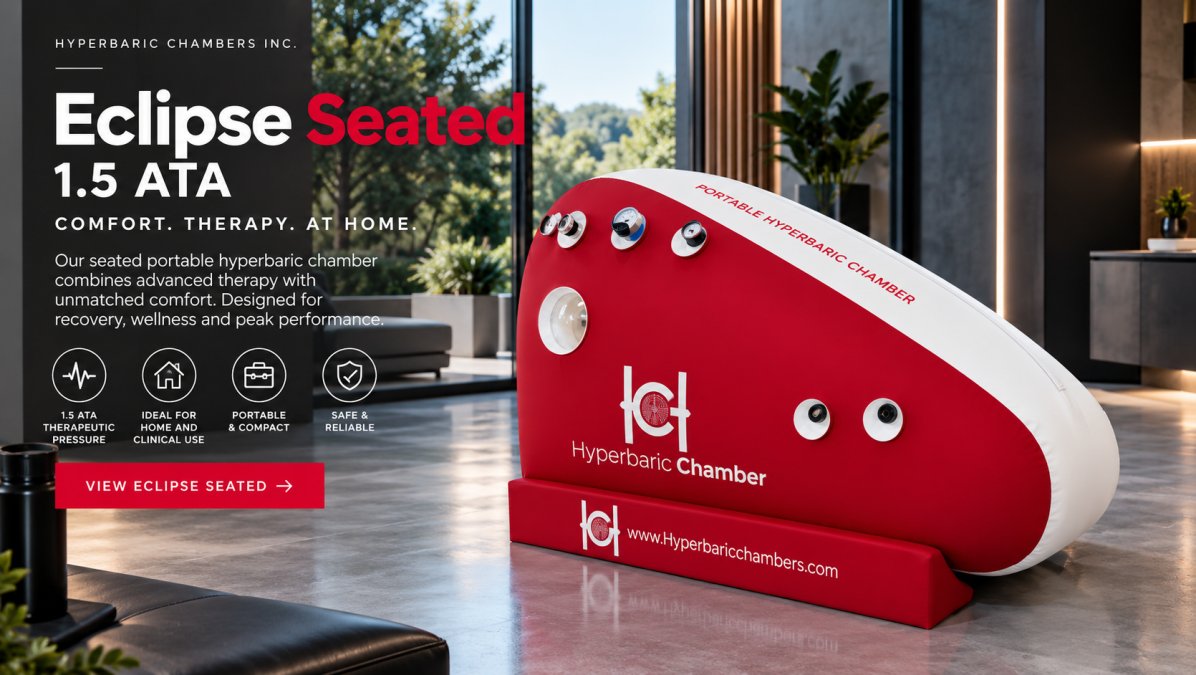
Table of Contents
- How to Compare the Best Hyperbaric Chamber Options
- Model Comparison: Pressure, Controls and Warranty at a Glance
- Hyperbaric Oxygen Therapy Benefits: What the Research Supports
- Portable Hyperbaric Chamber vs Hard Shell: Which Suits Your Space?
- Hyperbaric Chamber Session Duration and What Affects It
- Hyperbaric Chamber Safety Standards Australia: What to Confirm
- Choosing the Best Hyperbaric Chamber for Your Needs
- Conclusion
- Frequently Asked Questions
Last Updated: October 2, 2026
How to Compare the Best Hyperbaric Chamber Options
Finding the best hyperbaric chamber starts with matching pressure, controls and warranty to how you will actually use it, not with the lowest advertised figure. At Hyperbaric Chambers Inc, we supply eight models across four chamber styles. The differences that matter most are pressure rating, whether the unit has CPU controls and carbon dioxide monitoring, how oxygen is delivered, and what the warranty covers. This guide breaks down each factor so you can compare like for like.
A hyperbaric chamber is a sealed vessel that raises the ambient pressure around the occupant while oxygen is supplied separately through a breathing system, typically a mask. Pressure is measured in atmospheres absolute (ATA). Higher pressure is not automatically better; it changes what the session can reasonably aim to support and how the equipment must be built.
Four specifications decide most purchases:
- Pressure rating (ATA): 1.3 to 1.5 ATA covers portable lying and seated designs; 2.0 ATA units are hard-shell or walk-in.
- Controls: CPU-controlled models allow programmed sessions; entry models use manual operation.
- Carbon dioxide handling: selected models add CO2 monitoring and scrubbers; the iRestore uses HEPA filtration only.
- Warranty: selected chambers carry lifetime warranties; the iRestore carries two years.
Do not assume a feature listed for one model applies across the range. Pressure, CPU controls, scrubbers and warranty terms differ by model, so confirm each specification against the product page for the exact chamber before deciding.
Model Comparison: Pressure, Controls and Warranty at a Glance
Our range includes portable chambers from 1.3 to 1.5 ATA, and hard-shell or walk-in chambers at 2.0 ATA. The table below summarises verified specifications so you can scan the differences quickly.
| Model | Pressure | Style | Controls and CO2 | Warranty |
|---|---|---|---|---|
| iRestore | 1.3 ATA | Portable lying | HEPA filtration, no CPU or scrubber | 2 years |
| Eclipse Elite | 1.35 ATA | Portable lying | CPU controls | Confirm with team |
| Eclipse Elite Pro | 1.5 ATA | Portable lying | CPU controls | Confirm with team |
| Eclipse Seated | 1.5 ATA | Seated | CPU controls | Confirm with team |
| Eclipse Wheelchair | 1.4 ATA | Wheelchair-accessible | CPU controls | Confirm with team |
| Synergy | 2.0 ATA | Hard shell | CPU controls, CO2 monitoring | Confirm with team |
| Eclipse Elite 2.0 Seated | 2.0 ATA | Seated hard shell | CPU controls, CO2 monitoring | Confirm with team |
| GenZen | 2.0 ATA | Walk-in | CPU controls, CO2 monitoring | Confirm with team |
All chambers pressurise with ambient air; oxygen is delivered separately through the breathing system. Warranty terms vary by model, so confirm the current terms for your chosen unit with our team. Lifetime warranties are available on selected chambers, and the iRestore carries a two-year warranty.
Hyperbaric Oxygen Therapy Benefits: What the Research Supports
Hyperbaric oxygen therapy benefits are best understood by separating what published research examines from what marketing pages claim. Most clinical research uses higher pressures than home chambers and delivers oxygen in controlled medical settings, so results from those studies do not necessarily transfer directly to a different chamber at a different pressure used at home.
Findings versus marketing claims
The distinction matters more than the headline. Research into hyperbaric oxygen therapy has studied specific conditions, populations and protocols, and the outcomes reported belong to those conditions under those conditions. A study finding an effect at 2.0 ATA or above with a set oxygen protocol tells you what happened in that trial, not what a different chamber at a different pressure will do for you.
When you read a claim, check four things: the condition studied, who was in the study, the pressure used, and how oxygen was delivered. If a page promises a cure or a guaranteed result, that claim is not supported by the research literature, and we do not promise cures or guaranteed results.
Ask for the original source behind any clinical claim, not a summary on a sales page. If the pressure and oxygen method in the study do not match the chamber on offer, the finding does not apply to that chamber.
For guidance on how hyperbaric therapy is positioned in Australian clinical practice, check the Australian Government's health information portal and discuss your individual situation with a qualified medical professional.
Portable Hyperbaric Chamber vs Hard Shell: Which Suits Your Space?
The portable hyperbaric chamber versus hard shell decision usually comes down to space, pressure and access. Portable chambers are flexible, lighter and easier to store; hard-shell and walk-in units hold higher pressures and suit fixed installations in clinics or dedicated recovery rooms.
Portable soft-sided chambers, such as our iRestore, Eclipse Elite, Eclipse Elite Pro, Eclipse Seated, and Eclipse Wheelchair models, typically run from 1.3 to 1.5 ATA and can be deflated between sessions.
Seated and wheelchair-accessible designs
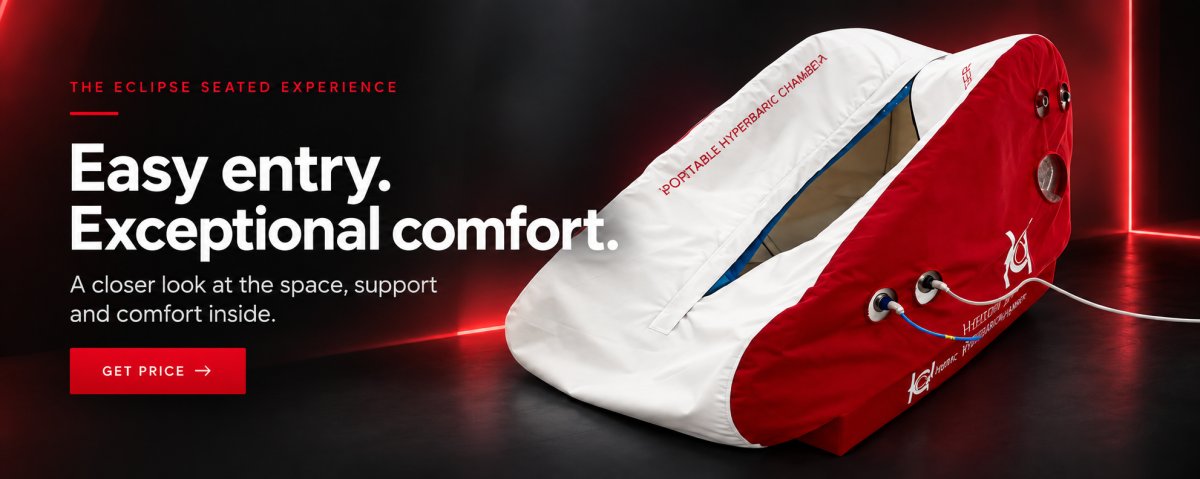
Access is the deciding factor for many buyers. Seated chambers let you sit upright rather than lie flat, which suits people who find enclosed lying positions difficult. The Eclipse Wheelchair at 1.4 ATA is designed for wheelchair users, and the Eclipse Seated and Eclipse Elite 2.0 Seated offer upright positions at 1.5 and 2.0 ATA respectively.
Hyperbaric Chamber Session Duration and What Affects It
Hyperbaric chamber session duration depends on the pressure used, the oxygen protocol, and how the chamber is operated, so no single figure applies across models. Clinical protocols set their own durations, and those are tied to the pressure and oxygen delivery used in that protocol.
What you should confirm before buying:
- The compression and decompression profile for your specific model
- Whether the session is intended to be attended or can be self-operated
- How oxygen is delivered and what the mask or breathing system requires
- What the manufacturer's documentation says about permitted items inside the chamber
Hyperbaric Chamber Safety Standards Australia: What to Confirm
Hyperbaric chamber safety standards in Australia are governed by Australian requirements, not overseas approvals. A clearance issued by a foreign regulator is not an Australian purchasing requirement, and no chamber should be presented as holding Australian approval without verified evidence for that exact claim.
- Which Australian standards and regulatory requirements apply to the unit
- What the manufacturer's operating and emergency procedures state for that model
- Whether the chamber can be operated from inside and what supervision that requires
- How oxygen is supplied and what monitoring the model includes
Oxygen delivery, monitoring and supervision
Oxygen delivery, monitoring and supervision are separate questions. Our chambers use ambient air for pressurisation and supply oxygen separately through a dedicated breathing system, usually a mask. Selected models add CPU controls and carbon dioxide monitoring with scrubbers; the iRestore uses HEPA filtration without a CPU or carbon scrubber.
A chamber that can be operated from inside is not automatically safe to use unattended. Supervision requirements follow the verified documentation for the exact model, so confirm them with our team before any session without an attendant.
Choosing the Best Hyperbaric Chamber for Your Needs
Choosing the best hyperbaric chamber for your situation means ranking pressure, access, controls and warranty against how and where you will use it. For example, a wheelchair user needs the Eclipse Wheelchair's access; a clinic wanting higher pressure should look at the 2.0 ATA hard-shell or walk-in models; a home user wanting simplicity may find the iRestore's 1.3 ATA and two-year warranty sufficient.
A useful way to decide:
- Access first: seated or wheelchair-accessible if lying flat is difficult.
- Pressure second: 1.3 to 1.5 ATA for portable home use; 2.0 ATA for hard-shell or walk-in.
- Controls third: CPU controls and CO2 monitoring where you want programmed sessions and monitoring.
- Warranty last but not least: lifetime cover on selected models, two years on the iRestore.
Conclusion
The best hyperbaric chamber is the one whose pressure, access, controls and warranty match your actual use. Compare models on those four points, verify every specification against the product page for that exact unit, and treat clinical research as evidence about the conditions studied rather than a promise about your outcome. Where information is not published, ask our team to confirm it before you commit.
Frequently Asked Questions
What is the difference between soft-shell and hard-shell hyperbaric chambers?
Soft-shell chambers use flexible, zippered materials and typically operate at lower pressures, which makes them lighter and easier to move between rooms. Hard-shell chambers hold their shape, generally reach higher pressures, and often include features such as CPU controls, carbon dioxide monitoring and scrubbers on selected models. The right choice depends on your target pressure, available floor space, and whether you need seated or wheelchair access. Confirm the specifications for each exact model with our team before deciding.
What pressure (ATA) should I look for in a home hyperbaric chamber?
Pressure is measured in ATA, and higher pressure is not automatically better for every buyer. Our range spans 1.3 ATA through to 2.0 ATA, with different models suited to different goals and spaces. A 1.3 ATA portable chamber suits flexible home use, while 2.0 ATA hard-shell models are chosen by buyers who want higher pressure and more advanced controls. Discuss your intended use with a qualified health professional and confirm the pressure rating of the exact model before purchase.
Do I need a prescription to buy a hyperbaric chamber in Australia?
Regulatory requirements for hyperbaric equipment can change, and they differ depending on how a chamber is intended to be used. We cannot give individual advice on your situation. Before buying, confirm the current requirements with the relevant Australian regulator and speak with a qualified health professional about whether hyperbaric therapy is appropriate for you. Our team can explain the specifications of each model, but the decision about clinical suitability should come from your treating practitioner.
Are home hyperbaric chambers safe for personal use?
Safety depends on the specific chamber, how it is installed, and how it is operated. Features such as carbon dioxide monitoring, scrubbers and dedicated oxygen delivery through a mask vary between models, and so do supervision requirements. Operating instructions, permitted items inside the chamber, and emergency procedures must follow the verified documentation for your exact model. Do not assume phones, electronics or accessories are permitted. Ask our team to walk you through the requirements for the model you are considering.
